
by Morgan Ashley
Most hyperpigmentation is a barrier problem before it is a pigmentation problem.
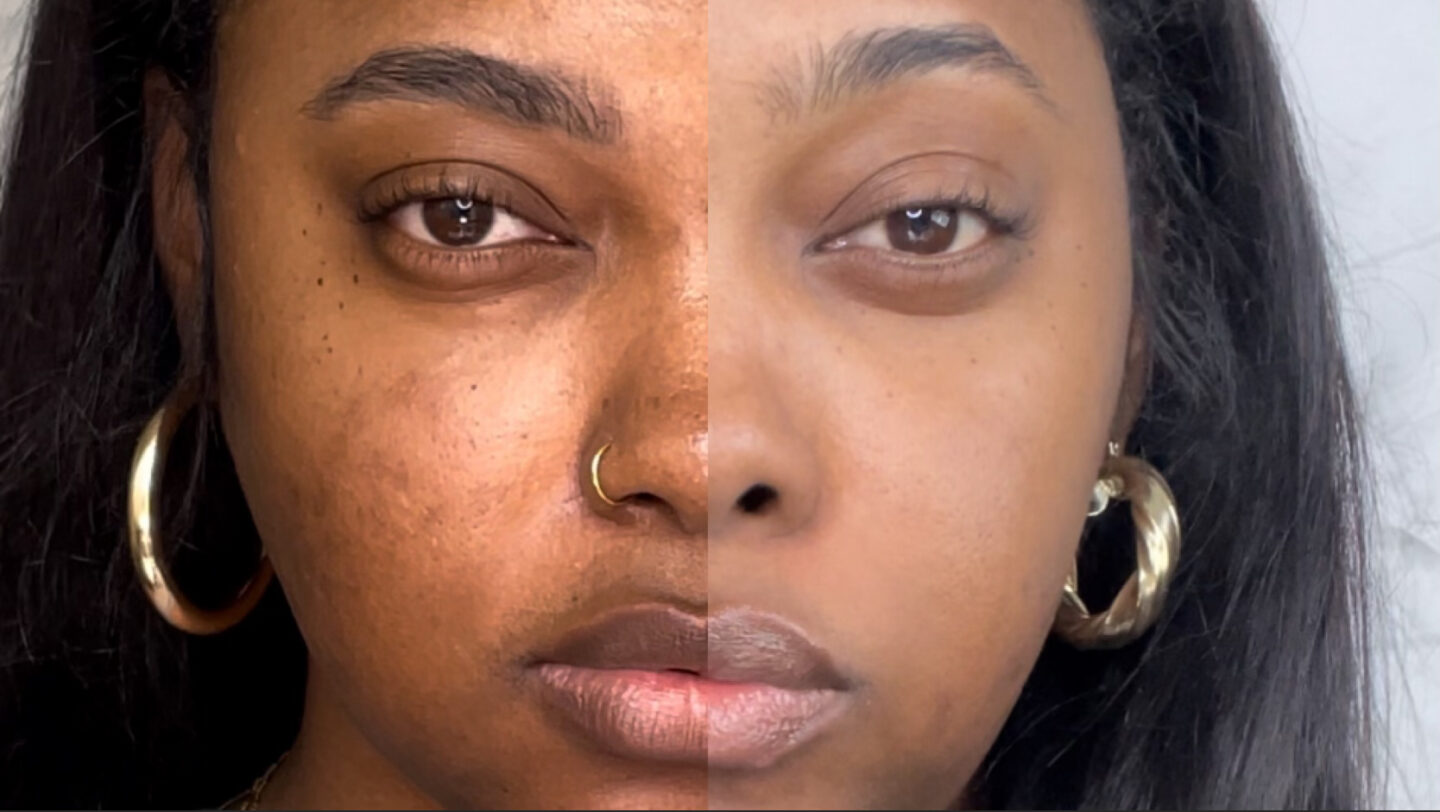
That sentence took me a long time to understand, and once I did, it changed every decision I made about my skincare routine. The dark marks, the uneven tone, the spots that would not fade no matter what brightening product I tried: many of them were not a melanin problem. They were a signal from a skin barrier that was being consistently stressed and responding in the only way it knows how.
What Damages the Skin Barrier for Melanin-Rich Skin
The skin barrier, or stratum corneum, is the outermost layer of your skin. Its job is to keep moisture in and external irritants out. When it is functioning correctly, it is a protective seal. When it is compromised, it becomes permeable in both directions: moisture escapes and irritants penetrate more easily.
A healthy skin barrier is the foundation of every other skincare goal. Hydration, brightening, anti-aging: none of these work as intended on a compromised barrier. Actives penetrate too aggressively and cause irritation. Moisture does not stay in the skin. Inflammation becomes easier to trigger.
For melanin-rich skin, inflammation and irritation trigger post-inflammatory hyperpigmentation. Which means a compromised barrier is not just a hydration problem. It is directly connected to the dark spots you are trying to address.
How to Know If Your Barrier Is Compromised
The signs are not always obvious, and they are not always what you expect.
Persistent dryness that moisturizer does not resolve. If you moisturize consistently and your skin still feels dry or tight within hours, the barrier is not holding moisture effectively.
Increased sensitivity. Products you have used without issue start causing irritation, stinging, or redness. Your skin is reacting to things it used to tolerate.
New dark spots appearing without a clear cause. If you are developing PIH in areas that have not been broken out or visibly irritated, the barrier may be stressed by something in your routine that is not obviously causing a reaction.
Rough texture or flaking that is not dry skin. A compromised barrier can cause the surface texture to become uneven or rough even when the skin does not feel classically “dry.”
Products feel like they are sitting on top of the skin. When the barrier is impaired, absorption changes. Products that used to sink in may sit on the surface.
What Damages the Barrier for Melanin-Rich Skin
Over-cleansing with harsh or stripping cleansers is one of the most common causes. A cleanser that leaves skin feeling “squeaky clean” is typically stripping the lipids that make up the barrier.
Over-exfoliation is another major culprit, and it is specific to melanin-rich skin in an important way: exfoliating acids and physical scrubs can cause micro-irritation that triggers PIH before any visible sensitivity response appears. You may not know your barrier is being stressed until the dark marks show up.
Too many actives stacked without adequate recovery time overwhelms the barrier’s ability to repair itself.
Environmental stressors — dry air, pollution, extreme temperatures — also contribute to barrier damage and are worth addressing, especially if your skin is already compromised.
How to Repair the Barrier
Barrier repair is not complicated, but it requires patience and a willingness to strip the routine down while the repair happens.
Remove the stressors first. If you are over-cleansing, switch to a gentle, pH-balanced, sulfate-free cleanser. If you are over-exfoliating, stop exfoliation entirely for four to six weeks. If your routine has too many actives, remove all of them temporarily.
Anchor the routine in barrier-building ingredients.
Ceramides rebuild the lipid structure of the barrier directly. They are the most important ingredient in a barrier repair routine. Look for formulas with ceramide 1, 3, and 6-II.
Niacinamide reduces inflammation, strengthens barrier function, and addresses pigmentation simultaneously. For melanin-rich skin in a barrier repair phase, niacinamide is doing three jobs at once.
Squalane is a lightweight, non-comedogenic oil that mimics the skin’s natural sebum and supports barrier function without clogging pores.
Hyaluronic acid draws moisture into the skin and helps it stay there. Apply to damp skin and seal with a moisturizer to maximize effectiveness.
Keep the routine simple during repair. Cleanser, niacinamide, ceramide moisturizer, SPF in the morning. Cleanser, niacinamide, ceramide moisturizer at night. Nothing else until the barrier is stable. Four to six weeks minimum.
Do not introduce new products during repair. Even if a product looks promising, the repair phase is not the time to test it. Stability first.
When the Barrier Is Stable, Then What?
Once the barrier is stable, you can begin reintroducing actives, one at a time, with adequate time between introductions to evaluate the response. Retinol, if it is your goal, belongs here: after the barrier is solid, not before.
The barrier repair phase is not a delay. It is the prerequisite that determines whether everything you do afterward actually works.
Read the full framework in the skincare for melanin-rich skin over 40 cornerstone. If you are considering retinol, read the retinol guide for melanin-rich skin for what needs to be in place before you start.
Morgan Ashley is the founder of L’HEIR, an editorial lifestyle brand for women who buy less and choose better.
